
What will it go on?
The caliber and the gun decide almost everything. One rifle, or several you want to share it between?
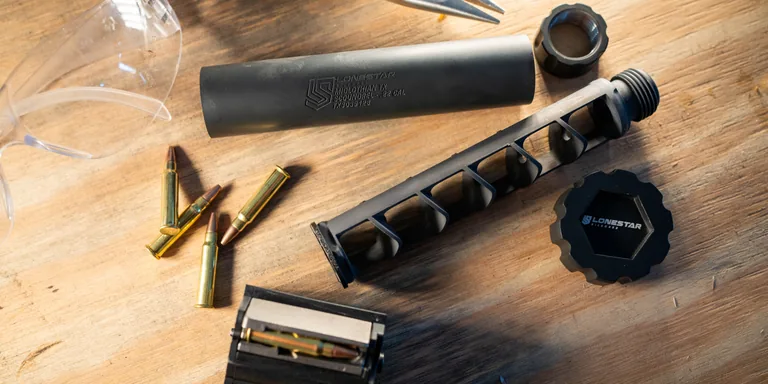
What a suppressor does, what it does not do, how to choose one, and how buying one works at our counter in Waukesha. Plain answers, no sales pitch.
The basics
Most of a gunshot's noise is hot gas leaving the muzzle all at once. A suppressor gives that gas somewhere to go first.
Inside the tube is a stack of baffles. Each one catches some of the gas, slows it and lets it cool before it reaches the open air. The bullet passes straight down the middle and never touches anything.
Myths and facts
No. They take the edge off the shot. Movies get this one badly wrong.
Suppressors are legal to own in Wisconsin. Wisconsin law requires them to be federally registered.
Not any more. Federal rules changed in 2026, and there is no longer a $200 federal tax on suppressors. The ATF Form 4 application is still filed.
We file the ATF Form 4 application with you at the shop and walk you through the current steps.
Types
A suppressor is built around what it will be shot on. These are the same groups our lineup uses, so each card leads to models you can look at.
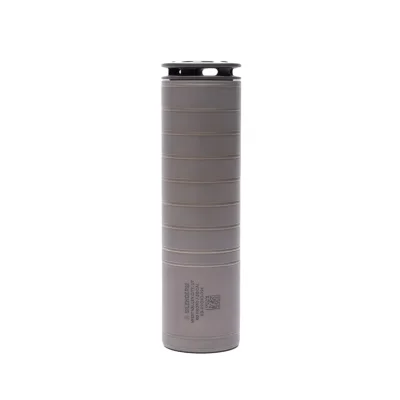
Built for rifle pressure. Usually sized by bore: 5.56, .30 caliber and larger.
See them from Griffin Armament rifle suppressors, Lone Star rifle suppressors, SilencerCo rifle suppressors, Dead Air rifle suppressors, Rugged rifle suppressors
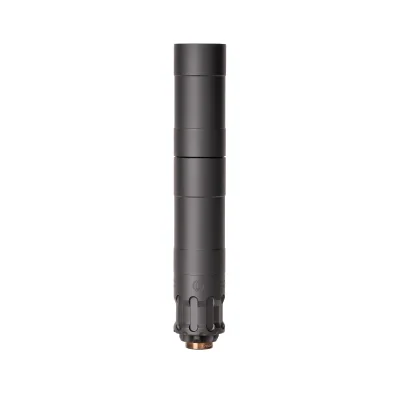
For handguns and pistol-caliber carbines. Most handguns also need a threaded barrel and a piston.
See them from Griffin Armament pistol suppressors, SilencerCo pistol suppressors, Dead Air pistol suppressors, Rugged pistol suppressors
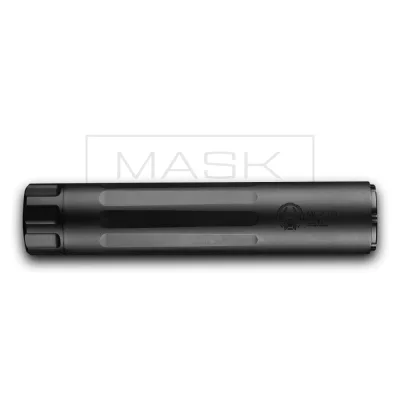
Small, light and the quietest to shoot. .22 runs dirty, so pick one that comes apart for cleaning.
See them from Griffin Armament rimfire suppressors, Lone Star rimfire suppressors, SilencerCo rimfire suppressors, Dead Air rimfire suppressors, Rugged rimfire suppressors
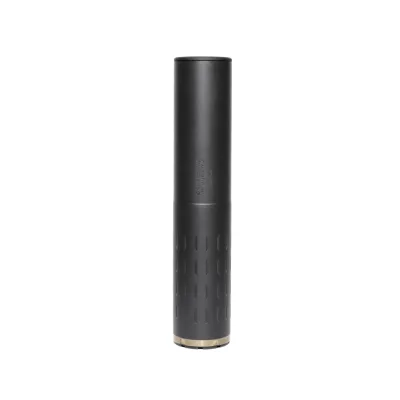
One suppressor rated for several rifles and pistols. Handy, with some trade-off against a dedicated one.
See them from Griffin Armament multi-caliber suppressors, SilencerCo multi-caliber suppressors, Rugged multi-caliber suppressors
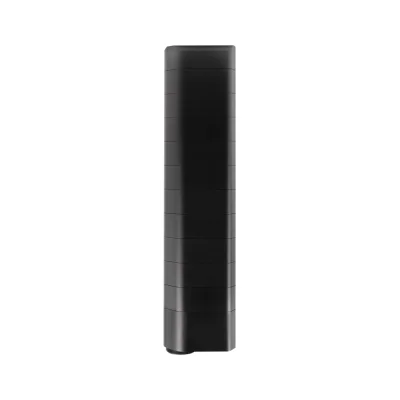
The least common kind. Larger, and it mounts through the choke threads.
See them from SilencerCo shotgun suppressors
Photos on this page are from the makers. Product names and photos are the property of their respective owners.
Choosing one
You do not need the answers before you call. Thinking about them first makes the conversation quicker.
The caliber and the gun decide almost everything. One rifle, or several you want to share it between?
Hunting, range days, home defense and long-range shooting each pull toward a different length and weight.
Titanium is light and suits a hunting rifle carried all day. Stainless steel and Inconel weigh more and stand up to heavy firing.
If not, our machine shop threads barrels for $190, so the rifle can be ready before the suppressor is.
Mounting
The mount matters as much as the suppressor. These are the terms you will see on the details pages.
Buying one in Wisconsin
Suppressors transfer on federal paperwork rather than the standard over-the-counter process, and we walk you through it.
Bought one somewhere else? A suppressor transfer through us is $100. See how transfers work. This page is general information, not legal advice. Laws change, and your situation may have details that matter.
Owning one
Rimfire and pistol suppressors collect lead and carbon and need regular cleaning, which is why many of them come apart. Most sealed rifle suppressors need very little. Follow the maker's instructions for yours.
A suppressor can work loose as it heats up. Check the mount before you shoot and again during a long session, once it is cool enough to handle.
A suppressor lowers the noise. It does not replace ear protection in every case, especially indoors or with supersonic ammunition.
Glossary
Yes. Suppressors are legal to own in Wisconsin. Wisconsin law still requires a suppressor to be federally registered, so we file the ATF Form 4 application with you.
No. Federal rules changed in 2026, and there is no longer a $200 federal tax on suppressors. In Wisconsin the suppressor still has to be federally registered, so the ATF Form 4 application is still filed.
No. A suppressor traps and slows the gas leaving the muzzle, which makes the shot quieter and less sharp. A supersonic bullet still cracks on its way downrange, and the action still makes noise.
Often, yes. A suppressor can be used on smaller calibers than its bore, within the maker's ratings, and a multi-caliber model is built for it. Tell us every gun you have in mind and we will check the ratings with you.
Yes. Barrel threading is $190 and is done on our own lathe. Installing a muzzle device starts at $45. See the gunsmithing price list.
Yes. We can get just about any brand and model. Tell us the make and model, or the rifle and caliber, and we will come back to you with a price.
Approval times change, so we will not post a number that may be out of date. Call (262) 349-9079 and we will tell you what we are seeing right now.
Stop in, call or email. We will talk through what you are looking for and how ordering works.